WhatsApp/Wechat:+86 15922636221
- All
- Product Name
- Product Keyword
- Product Model
- Product Summary
- Product Description
- Multi Field Search
 English
Views: 5 Author: Site Editor Publish Time: 2025-12-18 Origin: Site


Safety signs refer to the colors, graphics, and symbols used to represent and express specific safety information and meanings in accordance with national standards. They are usually composed of safety colors, geometric shapes (borders), and graphic symbols. The safety signs commonly found on Chinese ships mainly adopt GB2894 or the ship markings and signs of the International Maritime Organization (IMO).
I. Classification of Signs
Onboard safety signs are generally classified into four main categories: prohibition signs, warning signs, instruction signs, and information signs.
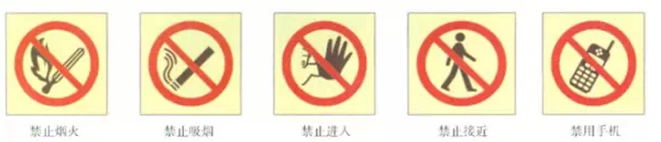
1. Prohibition Signs
Prohibition signs are circular symbols with contrasting red and white colors, a red border, and red diagonal lines. They are used to indicate that a certain action, item, or behavior is prohibited.
 | GB2894 |

| IMO |
2. Warning Signs
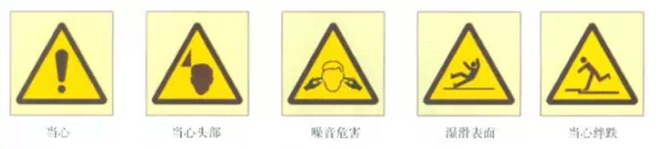
Warning signs are graphic symbols consisting of a yellow and black triangle with a black border, used to draw attention to the surrounding environment and avoid potential dangers.
| GB2894 |
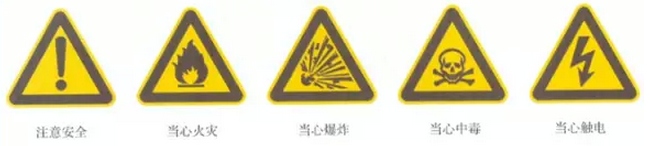
| IMO |
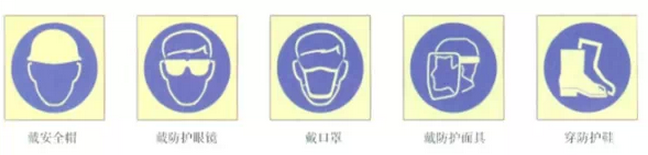
3. Directional Signs
Directional signs are circular, borderless graphic symbols in contrasting blue and white colors, used to remind people to take a certain action or take certain precautions.
| GB2894 |

| IMO |
4. Reminder Signs
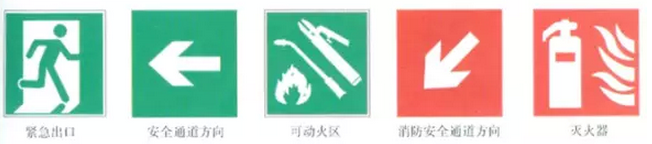
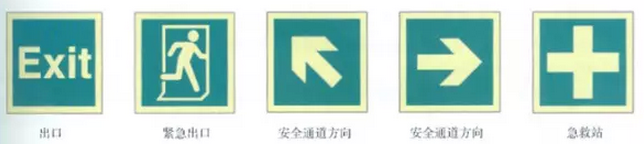
Warning signs are square, borderless graphic symbols in contrasting green and white (access, emergency) or red and white (fire) colors, used to convey certain information.
| GB2894 |
| IMO |
II. Use of Safety Signs
Crew members should understand the meaning of all safety signs and use them correctly and effectively. The following points should be considered when setting up safety signs:
1. Signs should be placed in a conspicuous, nearby, and unobstructed location related to work safety;
2. Signs should generally be installed slightly above the observer's eye level, but in some cases, placing them at other levels is appropriate (e.g., escape route signs);
3. Signs should avoid being placed on movable objects such as doors and windows;
4. When multiple signs are placed together, they should be arranged in the order of warning, prohibition, instruction, and reminder;
5. Danger and warning signs should be placed sufficiently far in front of the hazard to ensure that observers have sufficient time to prepare upon first seeing the sign and noticing the hazard.
This article is reproduced online. Disclaimer:
Except for the original articles specifically stated, the reprinted content is only to convey more information and does not mean that this website agrees with its views. The copyright of all reprinted articles, pictures, audio/video files and other materials belongs to the copyright owner. If it involves work content, copyright and other issues, please contact us in time so that appropriate measures can be taken quickly to avoid unnecessary economic losses to both parties.