WhatsApp/Wechat:+86 15922636221
- All
- Product Name
- Product Keyword
- Product Model
- Product Summary
- Product Description
- Multi Field Search
 English
Views: 4 Author: Site Editor Publish Time: 2025-04-11 Origin: Site


Product Classification
Classified by structural form:
there are traditional solid foam filled lifebuoys, and there are also inflatable lifebuoys. Inflatable lifebuoys are small in size and light in weight, making them easy to carry and store, but they need to be checked regularly for inflation status and tightness.
Classification according to accessories:
It can be divided into lifebuoys with self-lit floating lights, lifebuoys with spontaneous smoke signals, lifebuoys with floating lifelines and lifebuoys with a variety of auxiliary devices at the same time.
Performance Inspection
High and low temperature test:
The lifebuoy should be resistant to high and low temperatures, and there will be no shrinkage, cracking, expansion, decomposition and other phenomena after being tested in high and low temperature environments.
Drop Test:
After being cast from the specified height, the lifebuoy should not crack or break.
Oil and Fire Resistance Test:
It should be oil-resistant, without wrinkling, cracking, swelling and decomposition; At the same time, it should be fire-resistant and should not be burned or continue to melt after overheating.
Buoyancy test:
It can support 14.5kg of iron to float in fresh water for 24 hours.
Strength test: In the case of free suspension, it can withstand 90kg weight for 30min without cracking and permanent deformation.
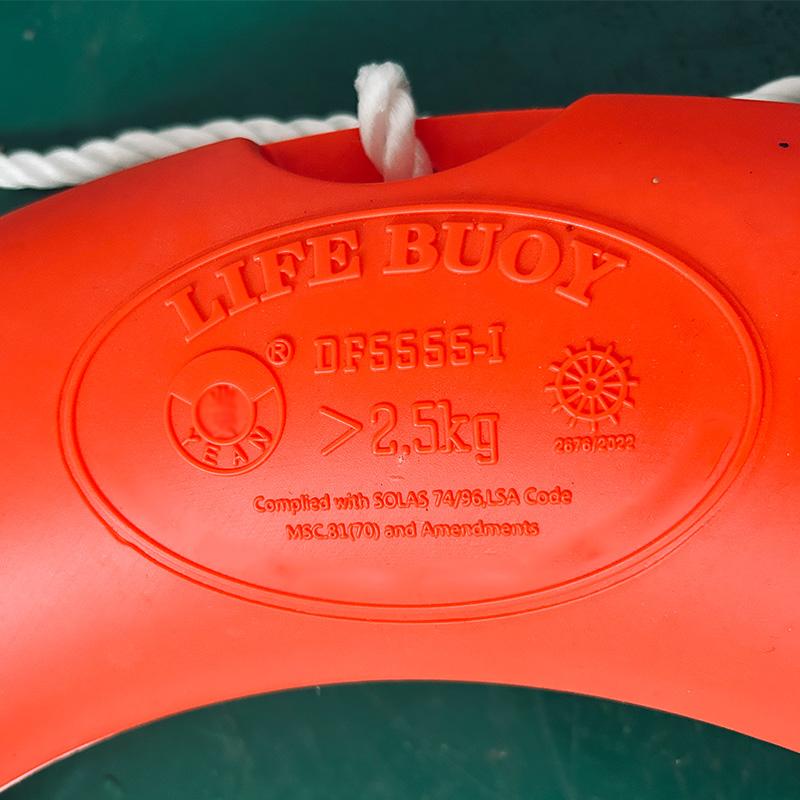
Certification: SOLAS-compliant lifebuoys are usually required to pass CE marking, CCS certification, etc., to demonstrate compliance with relevant international and domestic standards

Our products

Worry-free quality